When the Association for Advancing Automation (A3) invited me to attend Automate 2026 in Chicago—just a hop, skip and a jump away from my hometown of Grand Rapids, Michigan—I jumped at the opportunity. I wanted to see how much robotics had advanced. Surely the breakthroughs in AI had translated into equally dramatic progress in hardware. What would humanoid robots mean for construction? For gutter installation? My mind raced with possibilities.
After all, we've been told for years that AI will transform society. If that transformation is going to happen anywhere first, robotics seems like the obvious place. Pop culture certainly trained us to think AI and robots go hand in hand.
But after two days walking the conference floor, I came away with a very different impression.
The biggest story wasn't robots.
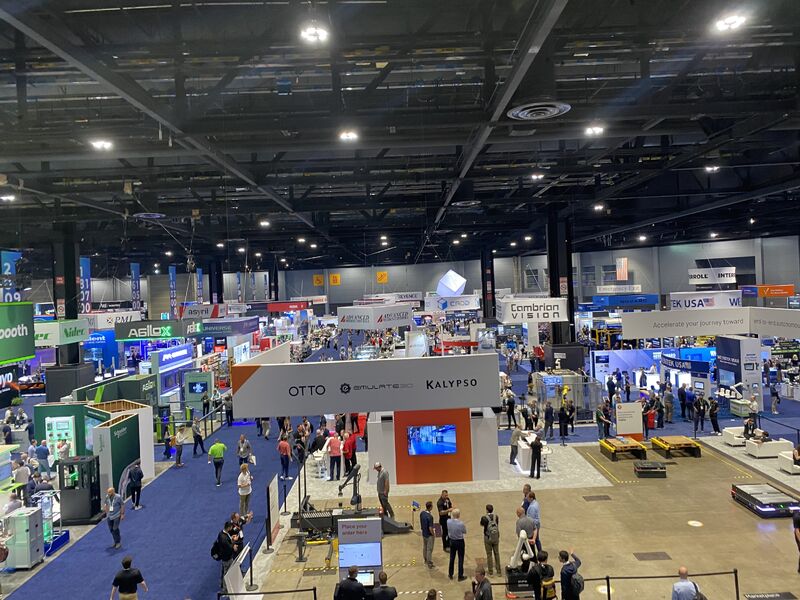
Automate 2026 had over 1,000 vendors over a 450,000 sq ft exhibit floor at McCormick Place in downtown Chicago.
Here are some of my takeaways.
Construction is a complex task, involving handling and manipulating heavy materials, tools, and navigating equipment designed for us...humans.
For this reason, construction specifically will require the use of humanoid robots (bipedal, with at least two hands and a full sensory system) for construction to be meaningfully handled end-to-end with robotics.
Arguably, this is a must even for the in-between step, where humanoid robots assist and work alongside actual humans.
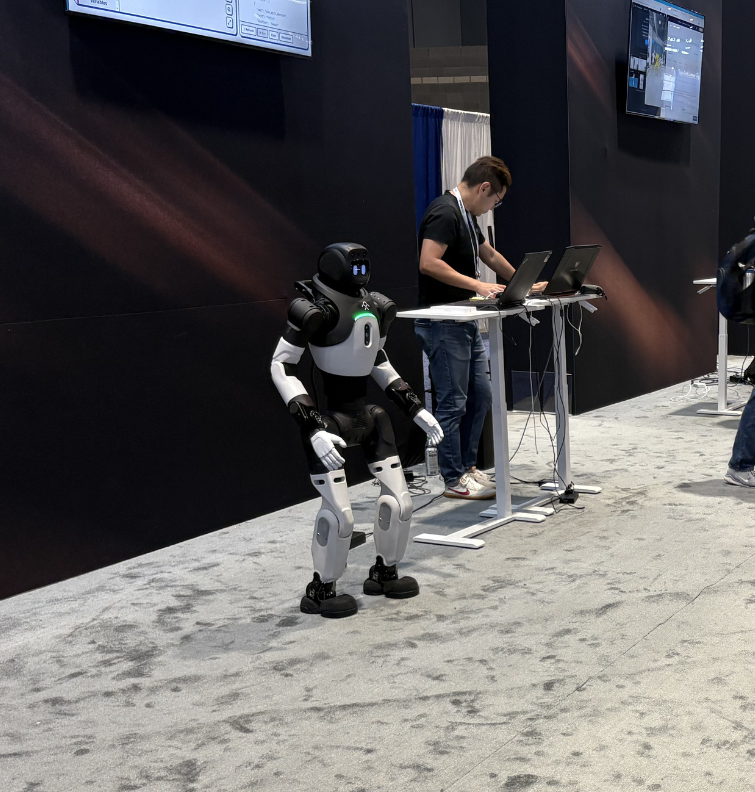
One of the surprisingly few humanoid robots on display at Automate 2026. It doesn't even have a pleasure mode.
The few humanoid robots I saw moved clumsily, like your mom after three drinks. And rather than being developed for use in a factory or a construction site, the manufacturers declared their humanoid robots were designed for use in schools or as entertainers, rather than infrastructure.
When I approached one of the CEO's and asked if their robot could climb a ladder - a must for any construction worker - he looked at me like I was an idiot for even asking the question.
"No." He replied.
In fact, the only humanoid-esque robot I saw performing a task of any value was the one making expressos at a Nvidia booth. It was missing both of its legs.
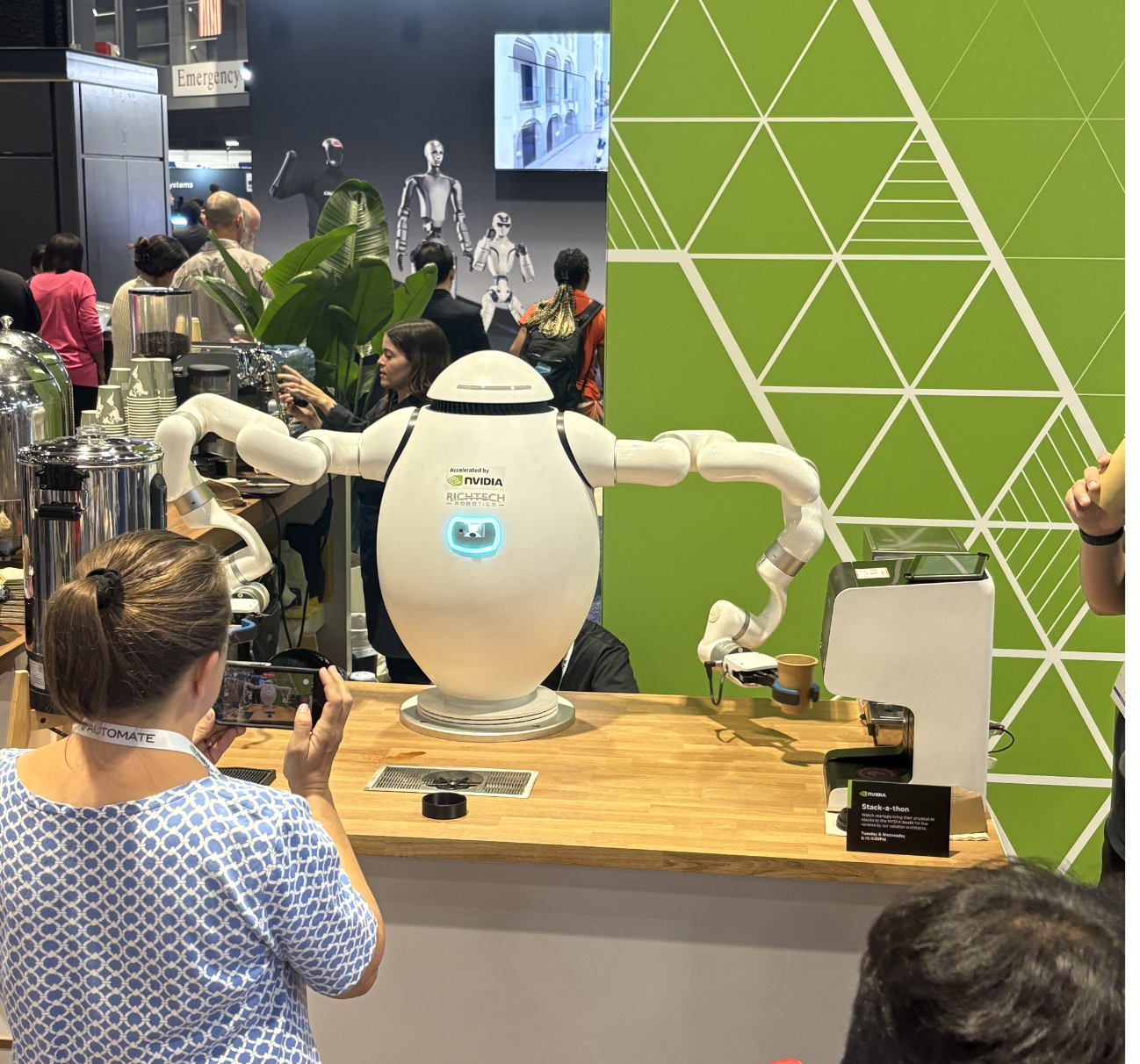
All the caffeine and none of the personality of my regular barista.
Barista-bot was the only vaguely humanoid shaped robot actually doing something of value at the conference. The robots are coming for Starbucks
first.
This isn't to say robots aren't already doing
some construction work.
Dusty Robotics' platform, another vendor at Automate 2026, is being actively used to print floor plans on construction sites and factory floors, which helps save an enormous amount of time on prep work.
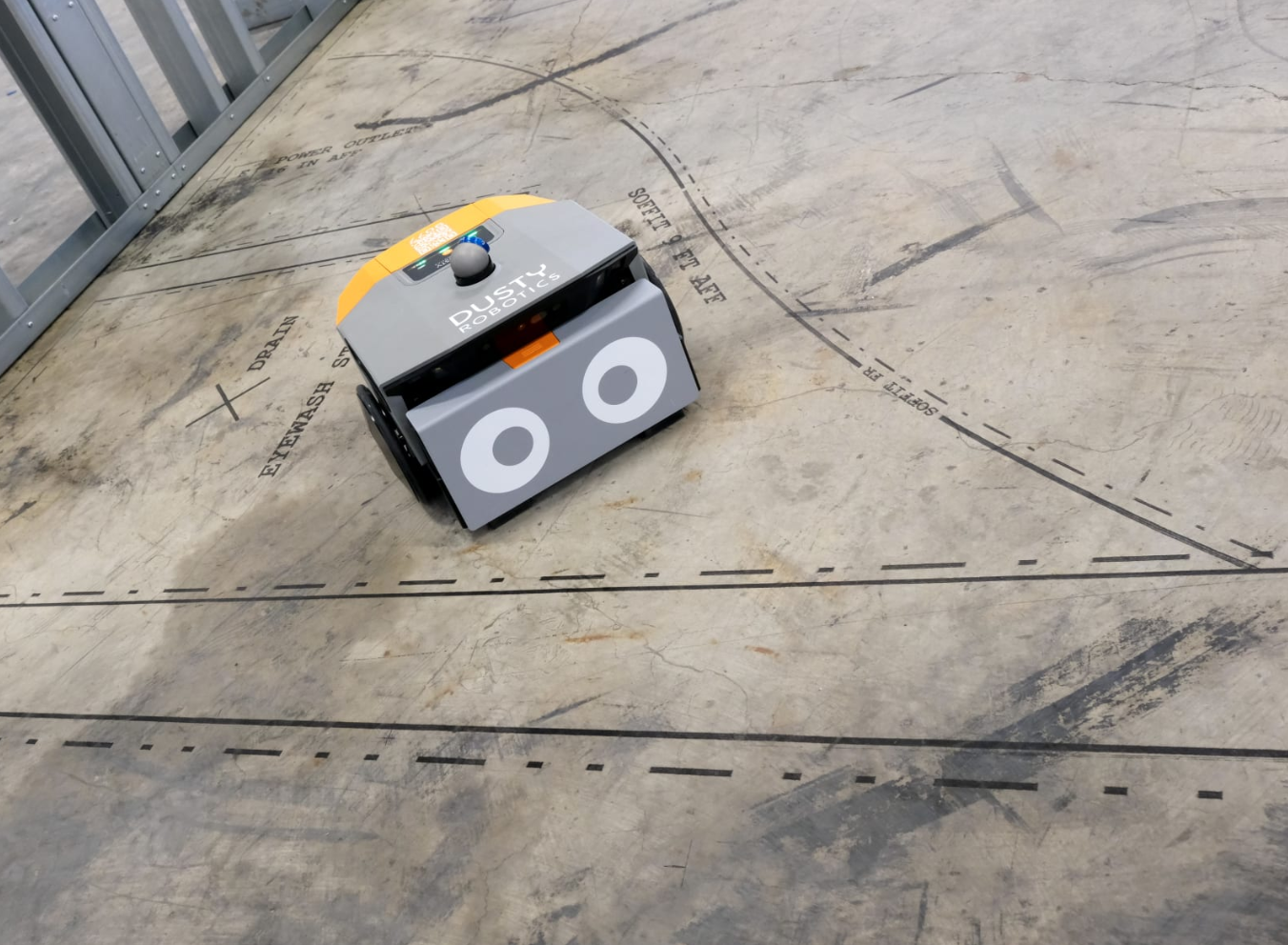
But still, there's. big gap here between a printer-on-wheels and a humanoid robot that can renovate your bathroom. And in hindsight, I shouldn't be surprised.
For a humanoid robot to help in construction, it needs to be strong, weigh about as much as your average construction worker to use scaffolding, ladders, etc, be capable of navigating complex and dynamic environments, work safely around more fragile human beings, understand construction processes and material, work with tools, etc.
That's a lot for any one company to handle.
It's no surprise my question about ladders was met with a hint of disdain—it pointed to a much larger issue. The grand promises we've heard about robotics from people like Elon Musk—that robots will eliminate poverty by driving exponential gains in productivity—are colliding with the realities of building machines that can withstand everyday physical work.
At first, designing a robot that can use hand tools doesn't seem especially difficult. But consider something as simple as swinging a hammer. Every strike sends shocks through the machine, potentially damaging a hand packed with thousands of delicate components and hundreds of motors. Once you think about the cumulative wear and tear, the challenge shifts from sounding ambitious to sounding nearly impossible.
Which leads to my second point...
I'm not the first one to notice this.
Automated Architecture has an entire business built around deploying "micro-factories" from shipping containers that assemble walls at construction sites.
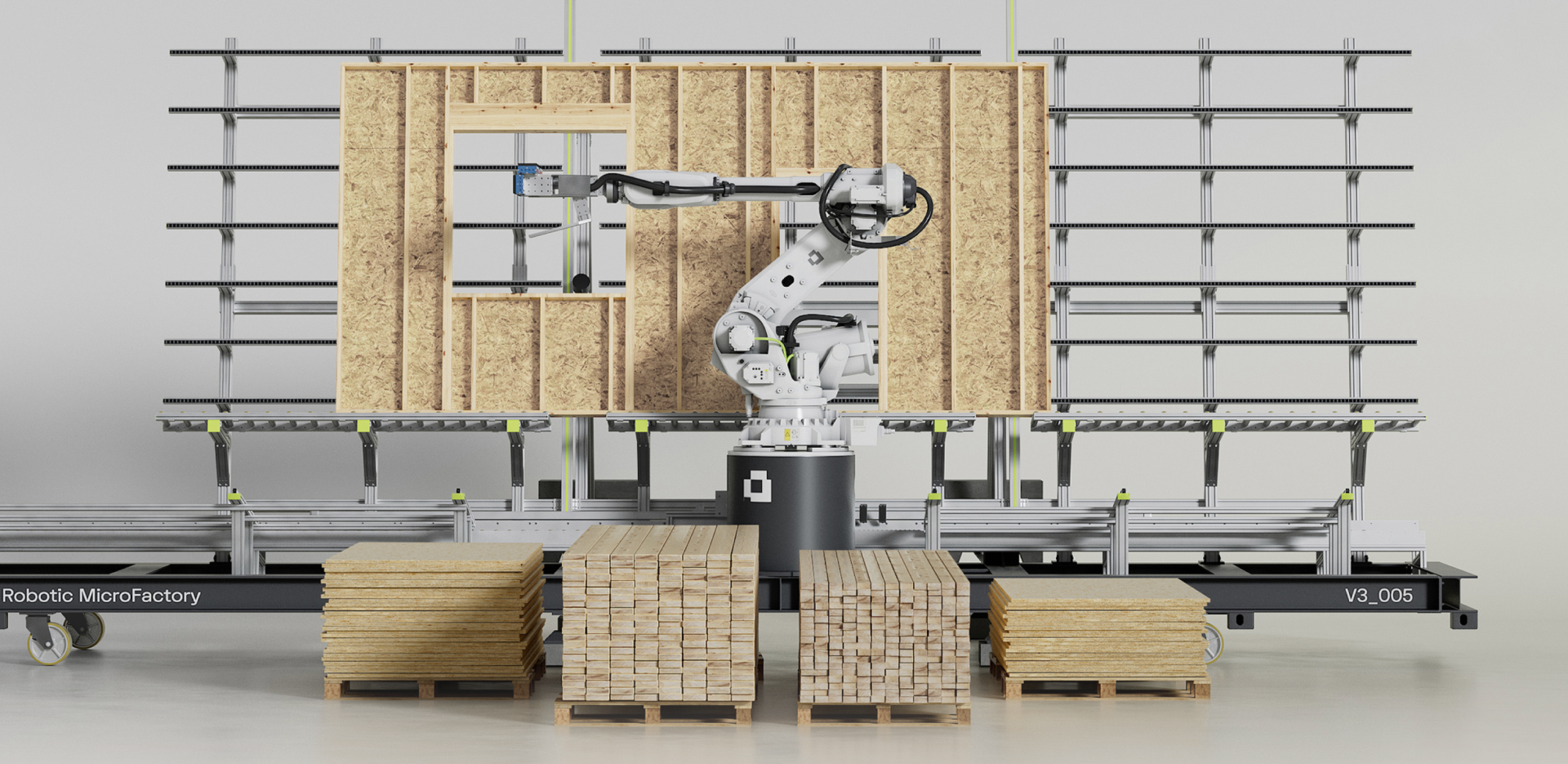
This is a step in the right direction for automated construction, but I suspect for robots to really take the task out of human hands entirely, homes, maybe even buildings in general. will have to undergo a fundamental redesign. Are we ready to expand our definition of what a home or building looks like, just to save money on construction?
I don't have an idea of what these future buildings may look like, but we can probably expect them to be modular and use different material that can be more readily manipulated by machines - think plastic, asphalt, and other substances that can be be printed rather than assembled.
Despite being a robotics conference, the headlines of Automate 2026 were dominated by AI startups who were focused on leveraging their technology to
train robots.
This is the big takeaway I teased earlier in the article.For example, two separate startups had AI systems that explicitly made it easier to train robotic arms. - think the kind you see in factories assembling car doors. Rather than program each individual movement, these companies had designed a solution that took basic verbal commands, combined with video, to train these arms.
AI powered vision also helped machines to grab objects in varying positions, navigate around the environment, and more.
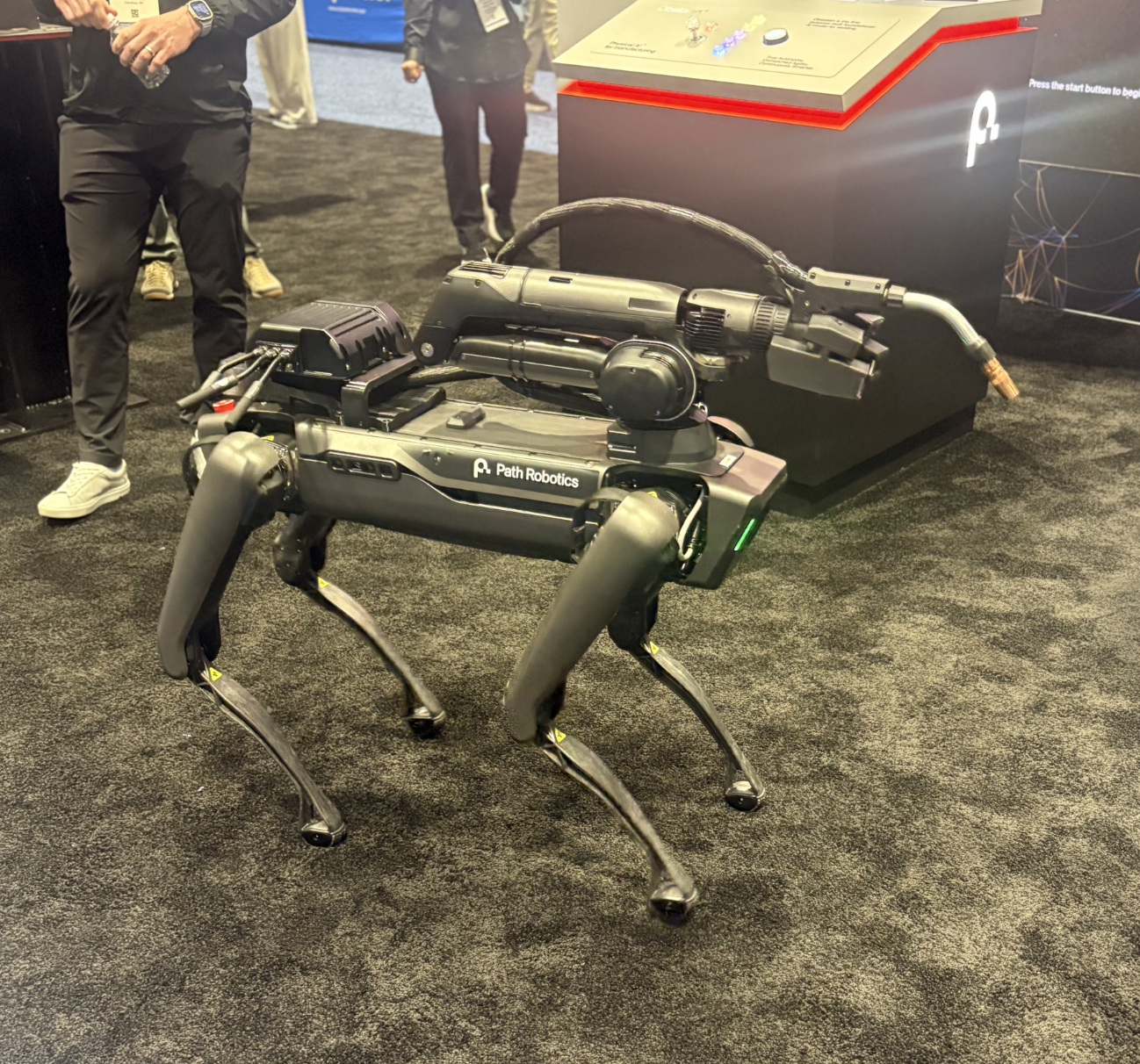
Path Robotics robot-welding dog uses this technology to weld in hard-to-reach or dangerous areas.
This is a far cry from the future imagined in
AI 2027, where AI designs robots that revolutionize manufacturing (and eventually take over the world or cause human extinction. It's a long read.)
In fact, it seems that training these machines for use in the real-world is considered a bigger problem than designing their form - collecting the data necessary to properly do so (or simulating it) is where a lot - maybe even most - of robotics R&D investment is going.
Of course, even if AI starts designing robots, how long will it be before we can manufacture them? These are two different problems.

The "Building a U.S. National Strategy for Robotics and Automation" panel was full of big hitters in the robotics space...and Bill Guidera.
A political appointee with a fancy title (Deputy Under Secretary of Commerce for Innovation and Engagement, AND International Trade Administration), Bill seemed to expect that his presence alone would indicate that robotics is a national priority for the administration. I walked away with the opposite impression.
Bill has no meaningful experience in manufacturing or robotics, which was immediately apparent. His opening speech meandered between comparing US manufacturing capability to China's (breaking news: we are very, very behind) and administration talking points about fair trade and tariffs.
The lack of substance was immediately made clear when another member of the panel - A CEO of a prominent robotics company - asked what
specifically the administration was doing to help push auotomation. Bill didn't answer the question; he simply said that constituents and voters needed to talk about the issue more and that he was there to listen.
That's not enough. There wasn't a hint that he had seriously taken a look at the issue, and
none of the policy proposals advocated by groups like A3 were even mentioned.In fact, Bill seemed more concerned with the
optics of automation - if a robot replaces two or three jobs, how will people vote? We can all agree this is an important question, but this is one that meaningful public policy can help address, like the kind advocated by A3.
It seems we are currently lacking a brave, forward-looking vision of the future that enables manufacturers to invest in automation with the support of the federal government.
If I had to guess, we are at least 5-10 years away from seeing humanoid robots working on construction sites.
You will likely start interacting with robots in other fields - think hospitality, education, and medicine - years before you see them wearing a safety vest and a hard hat.
Adoption will not take place overnight - you will likely start seeing robot helpers first - maybe carrying tools or small components, really just a walking tool belt capable of completing simple tasks - followed by two or three humanoids on a construction site completing tasks by themselves. These robots will use the same equipment we use, like ladders, scaffolds, hand tools, and more to complete tasks.
As the tech continues to advance, we may step into a world where buildings are constructed in entirely new ways.
What does this mean for gutter contractors?
Your job is very safe in the years to come.
This article was NOT written with AI.